LCD-U’S ACHIEVEMENTS
MITIGATION OF HIV/AIDS AND PREVENTION OF MALARIA
In 2005 and 2006, LCD-U worked in partnership with other organizations to mitigate the transmission of HIV by using IEC/BCC approaches in Kamuli, Kaliro and Mbale districts. School and out of school youths were trained in life skills. The programme also targeted parents, Local Council leaders and members of the School Management Committees so as to improve their communication with the youth. The main objective of this programme was to improve the sexual reproductive health of the rural youth both in and out of school as well as adults. Pupils and adults were trained in life skills through workshops. They acquired the relevant life skills necessary for safe guarding their health through behavioural change. The empowered youth were expected to become peer leaders in their respective communities. In total, one thousand two hundred one (1,201) people were trained in sexual reproductive health matters.
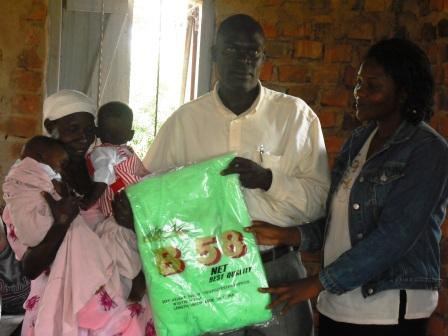
In many parts of rural Busoga, malaria remains one of the leading killer diseases especially among children; and the majority of the rural communities are ignorant about the preventive and curative measures. In this regard, LCD-U strongly believes that provision of basic information, coupled with the distribution of treated mosquito nets and essential drugs is the cornerstone of public health policy because it reduces the prevalence of malaria infection and death.
SUPPORT TO ORPHANS, VULNERABLE CHIDREN AND UNIVERSAL PRIMARY EDUCATION (OVC AND UPE)
Education as a means of fighting poverty and reducing vulnerability remains one of the top priorities for children. However, a significant number of schools in rural Uganda use incomplete and semi-permanent structures as classrooms. In certain cases some schools have their lessons conducted under trees and above all, without furniture for the pupils. The dusty classroom floors then turn into breeding grounds for jiggers and at times, lessons are interrupted during the rain season. The situation is aggravated by the inability on the part of pupils to afford scholastic and basic requirements, ill-health, long distance to school, and poor nutrition or no meals both in schools and at home.
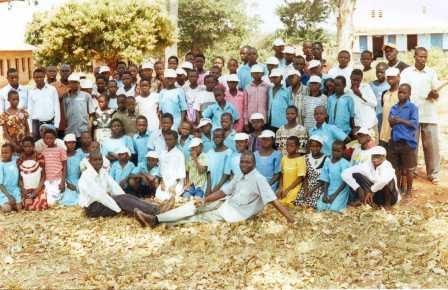
The factors highlighted above constitute the main barriers to primary school retention as well as access and full participation of children in education. According to the Uganda Demographic and Health Survey carried out in 2000/2001, 3% of primary school age children were not in school. In addition, many more children who were in school were not consistently attending lessons. The transition rate from primary to post-primary and tertiary levels has consequently been low and very few children are now likely to complete primary and continue to higher levels of education. Hence in an effort to improve the learning environment, LCD-U supported the completion of a five classroom block in September 2005 at St. Peters Nakakabala Primary School in Kamuli District. At the moment, the enrolment has increased from four hundred (400) to more than eight hundred (800) pupils. However, many other schools in more appalling situations need to be supported in order to generate the critical mass required for socio-economic progress.
Some orphans and vulnerable children (OVC) in primary schools are provided with scholastic materials every school term. One hundred (100) OVC from Bwase Primary School and the same number of OVC from Bugaga Primary School are given exercise books and pens in order to promote the Universal Primary Education (UPE).
ALLEVIATION OF POVERTY THROUGH VOCATIONAL TRAINING
The orphans and vulnerable children (OVC) in primary schools are trained in vocational skills so as to become self reliant and meet some of the school requirements. Handicrafts such as ropes, mats, hats, baskets and many other items are made and sold by the pupils to enable them generate income and buy school uniform and scholastic materials. This programme conforms to the Poverty Eradication Action Plan (PEAP).
NATURE CONSERVATION
The livelihood of the rural communities is material-intensive and in many parts of the country, trees have been cut down and cultivable land degraded. The resultant effects of environmental degradation are global warming, prolonged droughts and low agricultural out-put. In an attempt to reverse the deteriorating environmental conditions, LCD-U has introduced agro-forestry practices and launched sensitization campaigns at Bwase Primary School and Bugaga Primary School where pupils are encouraged to make tree nurseries in order to promote reforestation.
Organic farming practices through the use of plant and animal manure have been introduced and promoted in the same schools so as to maintain soil productivity for sustainable livelihood.
Hence, the efforts at nature conservation are tailored to harness the community’s natural resources on which its livelihood depends.
PROVISION OF SAFE AND CLEAN WATER
Due to inadequate sources of safe and clean water many rural communities remain vulnerable to ill-health because the per-capita consumption of safe water is still low. The existing few shallow wells are not sufficient for the growing population. Therefore some communities in Balawoli and Kidera Sub-Counties collect water from ponds and un-protected springs which are already contaminated by animal dung. This increases the risk of contracting water-related diseases such as diarrhoea, typhoid, and dysentery. In order to reduce prevalence of water-borne diseases, LCD-U has made an effort to sensitize these communities about the need to boil drinking water. However there is need to increase the number of shallow wells, water reservoirs and protected springs in schools and other communities in Kamuli District.
IMPROVEMENT OF ENVIRONMENTAL SANITATION
Some homes in the districts of Busoga lack pit latrines, bathrooms and garbage pits for waste disposal. A relatively similar situation is found in many schools which lack proper and adequate faecal disposal facilities. This has resulted into poor environmental sanitation with its associated illnesses. Worse still some families share shelter with livestock. However, campaigns on environmental sanitation have been launched at parish level by LCD-U and there has been a change in life styles among many rural communities of Kamuli District.
But while LCD-U recognises the potency of awareness building as a significant factor in entrenching good practice and changing attitudes and behaviours of the rural communities, there is need to scale up the coverage, particularly, of improved faecal disposal facilities in schools and house-holds of Busoga region.
This will significantly reduce the prevalence of poor sanitation-related illnesses.
OTHER PROGRAMME AREAS WORTHY OF SUPPORT
v IMPROVEMENT OF HABITAT FOR THE ELDERLY
v INCREASING HOUSE-HOLD INCOME FOR WIDOWS
v ERADICATION OF ALCOHOL AND SUBSTANCE ABUSE AMONG THE YOUTH
v REACHING OUT TO THE DISABLED |